Foundation cracks are one of the most common reasons Oklahoma City homeowners call us — and also one of the most misread. Some cracks are completely harmless and never need more than a coat of paint. Others are the first visible warning that a foundation is failing under pressure. The hard part is that they can look alarmingly similar to an untrained eye. This guide walks through the main types of foundation cracks, explains which ones are cosmetic and which are structural, and shows what each tends to mean on central Oklahoma’s expansive clay soil.
Not All Foundation Cracks Are the Same
The direction, width, and location of a crack tell you far more than its length. A long, thin crack can be meaningless, while a short horizontal one can be serious. Before you panic over a crack — or dismiss one — it helps to know what you’re actually looking at.
The Main Types of Foundation Cracks
Hairline and shrinkage cracks
Thin, often spiderwebbed cracks that appear in new concrete as it cures are usually shrinkage cracks. They’re typically cosmetic and don’t indicate movement. The same goes for very fine hairline cracks under about a sixteenth of an inch that aren’t growing or displacing — worth monitoring, rarely worth worrying about.
Vertical cracks
Cracks that run straight up and down, with both sides level and no displacement, are often the least concerning structural cracks. They commonly come from minor settling or concrete curing. They’re worth sealing to keep water out, but they’re usually not a sign of major movement on their own.
Diagonal and stair-step cracks
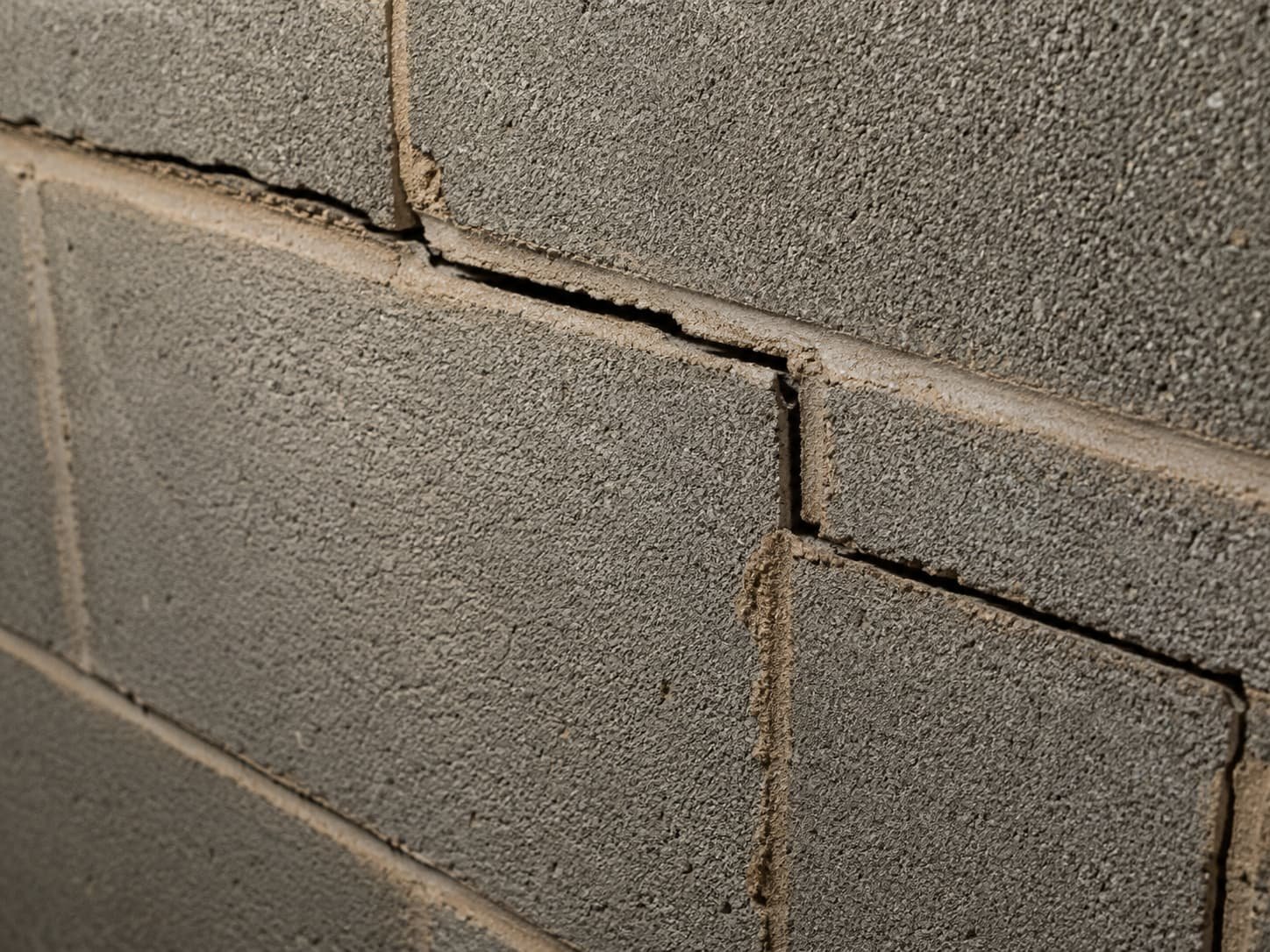
Cracks running at roughly a 45-degree angle, or stepping along the mortar joints of a block wall, point to differential settlement — one part of the foundation dropping more than another. On Oklahoma’s clay this is extremely common and deserves a professional look, especially if the crack is wider at one end or the two sides no longer line up.
Horizontal cracks
A crack running horizontally across a foundation wall is the most serious type. It usually means soil pressure is pushing the wall inward — the same force behind a bowing wall. Horizontal cracks rarely improve on their own and should be inspected promptly, because the wall is already losing the battle against the soil.
Floor and slab cracks
Cracks across a concrete slab or floor can be cosmetic shrinkage or a sign the slab is settling unevenly. When they’re accompanied by sloping floors or doors that suddenly stick, they often call for slab foundation repair to lift and re-level the concrete.
Cosmetic vs. Structural: How to Tell the Difference
You can’t always be certain without measurement, but a few signs push a crack from “monitor it” toward “get it inspected”:
- Width. Cracks wider than about a quarter inch warrant attention.
- Displacement. If one side of the crack sits higher or further out than the other, the foundation is moving.
- Direction. Horizontal and stair-step cracks are more concerning than clean vertical ones.
- Growth. A crack that’s visibly widening or lengthening over weeks and months is active.
- Company. Cracks alongside sticking doors, sloping floors, or gaps in trim signal a bigger pattern.
A simple trick is to mark the ends of a crack with a pencil and date it. If it grows over the following months, it’s active and worth a professional assessment.
Why Oklahoma City Foundations Crack
Central Oklahoma’s red clay is expansive — it swells when our heavy spring storms soak it and shrinks through the long summer drought. That wet-dry cycle lifts and drops foundations unevenly, and the resulting stress is what cracks concrete and racks walls. Poor drainage, gutters that dump water against the foundation, large trees pulling moisture from the soil, and plumbing leaks under a slab all concentrate that movement in one area. Because the cycle repeats every year, cracks tend to widen season after season rather than settle down. Proper repairs follow the structural standards published by the Foundation Performance Association, which always aim to address the soil-driven cause rather than just fill the gap.
What to Do When You Find a Crack
Don’t immediately seal a crack and forget it — sealing hides the evidence a professional needs to judge whether the foundation is moving. Instead, photograph it, note its width and direction, mark and date the ends, and watch for the warning signs above. If it’s horizontal, stair-step, wider than a quarter inch, displacing, or growing, schedule an inspection. At OKC Foundation Pros, every inspection and written estimate is free, and any recommended foundation repair comes with a transferable warranty.
Frequently Asked Questions
Are hairline cracks in my foundation normal?
Often, yes. Fine hairline and shrinkage cracks in concrete are common and usually cosmetic. The concern is width, displacement, direction, and whether the crack is growing — not its mere presence.
Can I just fill the cracks myself?
Sealing a confirmed cosmetic crack to keep water out is reasonable. But filling a structural crack without addressing why it formed simply hides an active problem that will reappear — and removes the information a professional needs.
How fast do foundation cracks get worse?
It varies, but on Oklahoma’s clay an active crack typically widens with each wet-dry season. That’s why marking and dating a crack is useful — it shows whether you’re dealing with something stable or something moving.
Foundation cracks aren’t all bad news, but they’re worth reading correctly. A clean vertical hairline is usually nothing; a horizontal or stair-step crack that’s widening is the foundation asking for help. If you’re unsure which one you’ve got, the safest and cheapest move is a free inspection before another wet-dry season widens it. Call OKC Foundation Pros for a clear, no-pressure assessment.