
A wet basement — or any damp below-grade space — is one of those problems that’s easy to shrug off until it quietly causes real damage. The early signs are subtle: a faint musty smell, a chalky white film on a wall, a patch of floor that’s always a little damp after a storm. Left alone, that moisture rots framing, feeds mold, and adds pressure that can crack and bow foundation walls. This guide covers the warning signs to watch for in Oklahoma City homes, what’s actually causing the water, and how to stop it for good.
What “Basement” Really Means in Oklahoma City
Full basements are far less common here than in colder regions — most OKC homes sit on slabs or pier-and-beam foundations. But that doesn’t mean below-grade moisture isn’t a problem. Daylight basements, partial basements, below-grade rooms, storm shelters and cellars, and the dirt crawl spaces under older homes all sit against the same wet clay and face the same water pressure. So as you read the signs below, apply them to any part of your home that sits at or below ground level — the warning signals are the same whether it’s a finished basement or a crawl space.
The Warning Signs of a Wet Basement
Musty or earthy odors
That distinctive damp, earthy smell is often the very first sign, and it usually means moisture and possibly mold are present even before you can see them. Because below-grade air rises into the living space, a musty basement or crawl space frequently makes the whole house smell.
Efflorescence (white chalky residue)
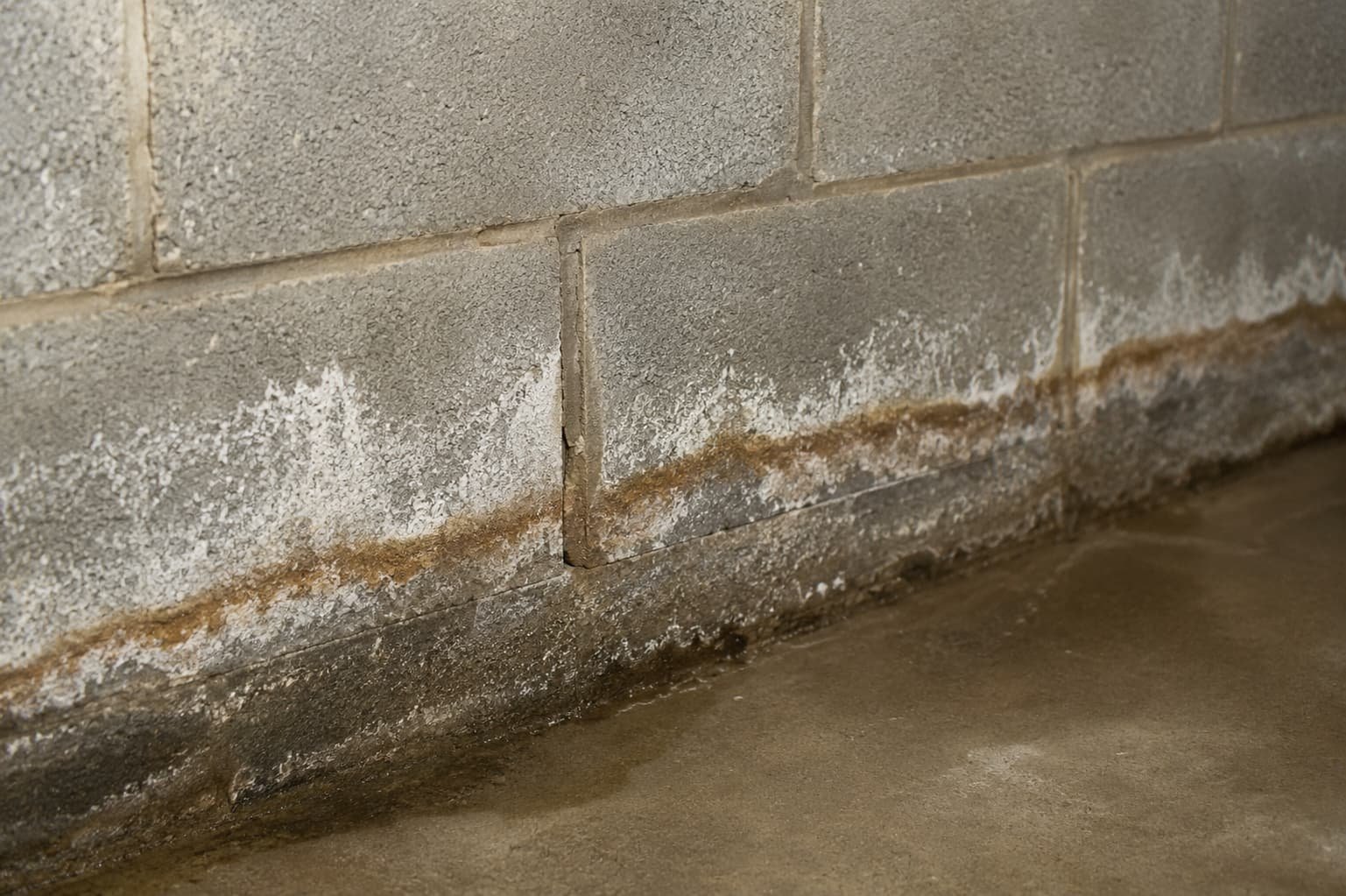
A white, powdery, crystalline film on concrete or block walls is efflorescence — mineral salts left behind as water moves through the masonry and evaporates. It’s a clear sign water is passing through the wall, not just sitting near it.
Damp walls, stains, and tide marks
Dark patches, water stains, or a horizontal “tide mark” along the lower courses of a wall show where water has been sitting or wicking up. Walls that feel cool and damp to the touch are actively taking on moisture.
Standing or pooling water
Water collecting on the floor — especially after heavy rain — is the most obvious sign and usually points to drainage failing or groundwater pushing up through the floor-wall joint.
Mold and mildew
Visible mold on walls, framing, or stored items confirms a chronic moisture problem. Beyond the structural concern, persistent dampness indoors is a recognized health issue; the EPA links ongoing indoor moisture and mold directly to poor air quality and respiratory problems.
Condensation and high humidity
Sweating walls, foggy windows, or a clammy feel in the space indicate humidity high enough to cause damage over time, even without an obvious leak.
Peeling paint, rust, and rot
Bubbling or peeling paint on below-grade walls, rust on metal fixtures and appliance feet, and soft or rotting wood all point to moisture that’s been present for a while.
Cracked or bowing walls
Water in the soil adds pressure against foundation walls. A horizontal crack or an inward bow is a serious sign that water-driven pressure is at work — the same force behind a bowing wall.
What Causes a Wet Basement in Oklahoma City
The root cause is almost always water in the soil combined with pressure. Central Oklahoma’s red clay holds water tightly, and our heavy spring storms can saturate the ground in hours. That saturated soil builds hydrostatic pressure that forces water through hairline cracks and the cove joint where the wall meets the floor. Surface problems make it worse: gutters that overflow or dump water against the foundation, downspouts that don’t extend far enough, and grading that slopes toward the house instead of away from it. Less often, the source is a plumbing leak or simple condensation. Pinpointing which one — groundwater, surface runoff, or condensation — is the key to fixing it properly. Proper drainage solutions follow the standards published by the Foundation Performance Association.
Why You Shouldn’t Wait
A wet basement or crawl space never dries out on its own, because the soil keeps cycling and the water keeps coming back. The damage compounds: moisture rots framing, mold spreads, stored belongings are ruined, and the standing pressure works on your foundation walls year after year. What starts as a faint smell can become a structural repair. Acting at the first signs is far cheaper than waiting for the consequences.
How to Stop a Wet Basement for Good
The right fix depends on how the water is getting in. Simple cases may only need better grading, gutter extensions, and crack sealing. Persistent groundwater usually calls for an interior drainage system and a sump pump to collect and remove the water, sometimes paired with exterior sealing. Damp crawl spaces are best handled with encapsulation — sealing the space with a heavy vapor barrier and controlling humidity. For a chronically wet basement or below-grade room, professional basement waterproofing addresses the source rather than chasing symptoms. At OKC Foundation Pros, every inspection and written estimate is free, and the work is backed by a transferable warranty.
Frequently Asked Questions
Is a little basement moisture normal?
A truly dry below-grade space is the goal. Occasional minor condensation in humid weather can be manageable, but recurring dampness, efflorescence, or musty odors are signs of a real water problem worth addressing.
Will a dehumidifier fix a wet basement?
A dehumidifier manages humidity but doesn’t stop water entering through walls or floors. It’s a useful part of the solution, not a substitute for fixing the source.
Does a wet basement affect my home’s value?
Yes. Moisture, mold, and water staining are common red flags in a home inspection and can stall a sale. A documented waterproofing repair removes that obstacle and protects the home’s value.
A wet basement or damp below-grade space is your home’s early-warning system — the smell, the chalky residue, the damp patch after a storm are all telling you water is getting in. The sooner you trace the source and stop it, the less it costs and the less damage it does. If you’ve noticed any of these signs, call OKC Foundation Pros for a free, no-pressure inspection and a clear plan to keep the space dry.